Decoding the Lab: Why AI Adoption in the Chemicals Market is Slowing, and Where the Billions Lie
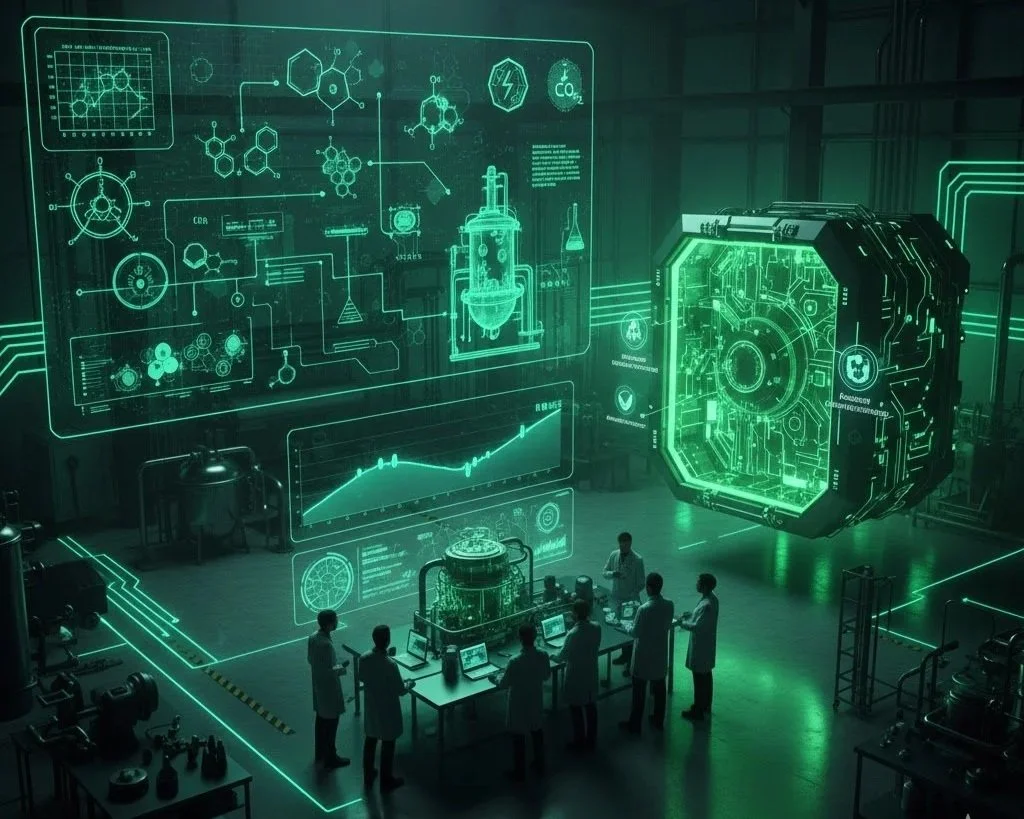
The chemical industry, the foundation of modern manufacturing, is on the cusp of a significant transformation, driven by the emergence of Artificial Intelligence (AI) and, more recently, Generative AI (Gen AI). While a majority of industry executives acknowledge AI's critical importance for future success, the sector remains a cautious adopter, trailing many others.
This paradox—high recognized potential versus low actual implementation—defines the current landscape. While the path to mass adoption is fraught with specific organizational and technical hurdles, successfully leveraging AI stands to unlock anywhere from $80 billion to $140 billion in value across the broader energy and materials sector, making the technology too valuable to ignore.
The Transformative Potential: Where AI Creates Value
AI, and especially Gen AI (which synthesizes unstructured data like lab notes and literature with structured data), is poised to revolutionize the chemical value chain across three core domains: R&D, Commercial, and Operations.
1. Research and Development (R&D)
Innovation in chemicals is historically slow, but AI accelerates the process dramatically:
New Molecule & Material Discovery: AI models can accelerate discovery by two- to three-fold, identifying novel, patentable chemistries optimized for specific end-state properties. By leveraging vast public and proprietary data, AI helps researchers move from expensive, slow customization cycles to rapid, data-driven formulation.
Rapid and Precise Formulation: AI optimizes formulation specifications, potentially leading to 5% savings on cost by minimizing over-specification and recommending the lowest-cost mix of raw materials to meet customer requirements.
Augmented Knowledge Extraction: AI can analyze and summarize enormous volumes of scientific literature, patents, and grants, increasing the speed of initial manual literature assessments by more than 30%.
2. Commercial Growth
AI moves beyond process optimization to drive top-line revenue growth and customer acquisition:
Customer Acquisition & Account Management: By deeply analyzing market data, web content, and internal transactional records, Gen AI enables precision targeting, which can sustain a revenue uplift of 10 to 20 percent for new customer growth and identify 20 to 30 percent more incremental opportunities in strategic account pipelines.
New Application Discovery: AI can slash the time required to find new applications for existing chemicals from months to just days by analyzing external patents and industry news to reveal untapped markets.
Sales Execution and Pricing: AI analyzes a multitude of factors (market data, competitor prices, long-term buying patterns) to enable real-time, dynamic pricing strategies, which can secure a 2 to 5 percent return on sales and reduce customer churn by 10 to 20 percent.
3. Operations and Supply Chain
In asset-heavy manufacturing, AI significantly boosts efficiency and uptime:
Predictive Maintenance: AI helps process historical maintenance data and public knowledge to enhance failure modes and effects analysis (FMEA), enabling operators to predict failures and leading to a 30 to 40 percent increase in maintenance labor productivity.
Operational Throughput: Real-time process optimizers layered with Gen AI can increase yield and throughput by over 10 percent. These systems can act as control room "copilots," quickly answering technician queries and providing live troubleshooting advice.
Supply Chain Optimization: AI generates rapid insights, simulates various network scenarios, and helps detect potential disruptions, leading to a reduction in lost sales related to customer service by more than 65 percent.
The Obstructions: Why Adoption Lags
Despite the clear benefits, the transition to an AI-driven model is slow. A recent report indicated that while 80% of chemicals executives surveyed believe AI will be critical for success, only 4 in 10 companies have implemented an enterprise-wide AI strategy. The key obstructions fall into three primary areas:
Lack of Expertise: The most significant challenge is the shortage of professionals with interdisciplinary skills. Successfully deploying AI in chemistry requires a rare blend of deep domain knowledge (chemistry), data science proficiency, and computer science expertise. Without these dual-trained professionals, development and implementation become a major hindrance.
Lack of Organizational Buy-in: AI initiatives are often driven by centralized data or tech teams, leading to resistance from employees in other departments who view the change as disruptive. Without vocal and consistent championing from top management (CEOs), organization-wide acceptance and collaboration stall.
Perception of Cost and Time: There is a widespread belief that AI implementation is time-consuming and expensive. Since it can take over three months to see the first tangible results, prioritizing these long-term projects is difficult for already overloaded operational teams, leading to delayed or canceled initiatives.
The Financial Imperative: Market Size and Growth.
The AI-based chemical manufacturing market is experiencing explosive growth, driven by the global imperative for enhanced production efficiency, cost reduction, and sustainability.
1. Market Size and Growth
Current Valuation: The global AI in chemicals market was valued around USD 0.94 billion to USD 1.41 billion in 2023–2024 (various sources).
Projected Growth: The market is forecast to grow at an aggressive Compound Annual Growth Rate (CAGR) ranging between 27.8% and 41.4% through 2029–2034, depending on the research firm.
Future Value: The total market size is expected to reach well over USD 5 billion by 2030, with some forecasts projecting a value of over USD 20 billion by 2033.
Market Driver: This growth is fueled by the need to enhance production processes and move operations from reactive to proactive management through AI-driven process optimization and predictive maintenance.
2. Key Segments and Applications
While the market encompasses R&D and commercial applications, the segments most directly related to manufacturing and driving immediate market value are:
Key Segments of the AI-Based Chemical Manufacturing Market
| Application Segment | Market Share/Driver | Description |
|---|---|---|
| **Production Optimization** | Dominates the application segment. | AI-driven tools improve process control, reduce waste, enhance energy usage (sustainability), and maximize yields/throughput. |
| **Operational Process Management** | Core component of manufacturing. | Includes predictive maintenance, which significantly minimizes unplanned downtime and increases labor productivity. |
| **New Material Innovation (R&D)** | Expected to see significant growth. | AI accelerates the discovery and testing of new materials, which then enter the manufacturing pipeline faster. |
| **End-Use** | Base Chemicals & Petrochemicals accounted for the largest revenue share in 2023 due to the scale of their operations. | *Target end-use market for AI solutions.* |
| **Component** | The **Software** segment leads the market. | Software is central to implementing and utilizing AI technologies (e.g., process simulation, chemical modeling). |
Conclusion
The "AI in chemicals market" presents a dichotomy: a monumental potential for value creation through accelerated R&D, optimized commercial processes, and increased operational efficiency, balanced against fundamental challenges related to talent, culture, and initial investment perception.
To cross this gap, chemical companies must shift their focus from viewing AI as a costly IT project to seeing it as a strategic business imperative. By investing in interdisciplinary training and ensuring robust support from the executive level, firms can overcome the initial resistance and begin unlocking the tens of billions of dollars waiting in the lab, the plant, and the commercial office.