Laboratory Equipment and Supplies for Chemistry 2.0: The Advanced Protocol
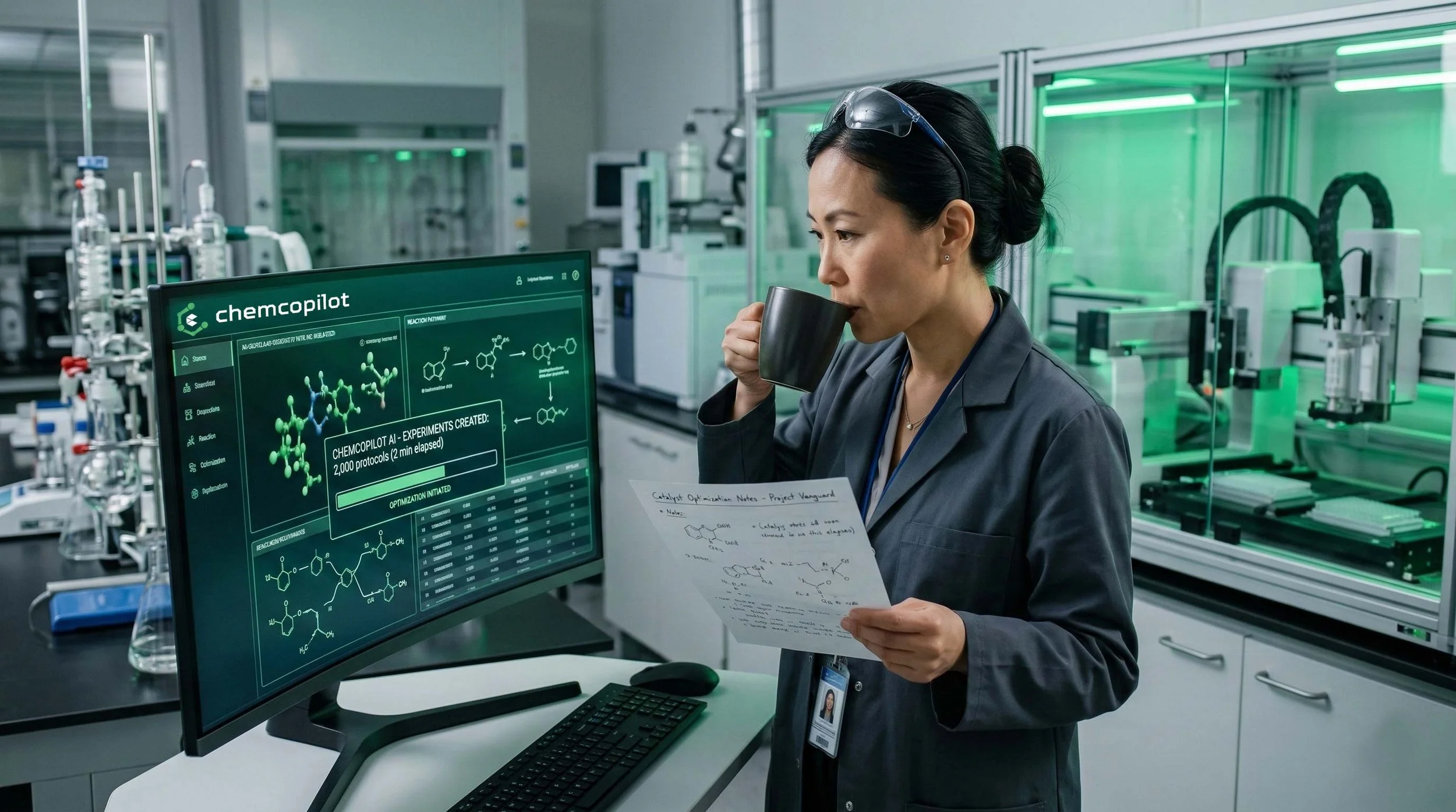
In the modern era, the "2.0" designation represents the integration of digital precision with traditional organic and inorganic workflows. We are moving away from "standard" setups toward modular, high-throughput, and inert-handling environments.
1. Beyond the Bench: Inert Atmosphere & Schlenk Techniques
For those handling air-sensitive organometallics or moisture-critical catalysts, the standard nitrogen purge is no longer sufficient. Chemistry 2.0 demands a rigorous approach to exclusion.
Dual-Bank Manifolds (Schlenk Lines): Upgrading to high-vacuum manifolds with independent nitrogen/vacuum controls and specialized cold traps for solvent recovery.
Glovebox Integration: For 15-year veterans, the transition to an inert atmosphere workstation (e.g., $< 1 \text{ ppm } O_2 / H_2O$) is the ultimate "Level 2" move for catalyst stability.
Anhydrous Solvent Systems: Moving away from dangerous thermal stills to pressurized column-based solvent purification systems (SPS).
2. Process Intensification: Flow Chemistry & Automation
The shift from batch reactions to Continuous Flow Chemistry is perhaps the most significant jump in the 2.0 era. It offers superior heat transfer, safety with hazardous intermediates, and impeccable reproducibility.
| Feature | Traditional Batch (1.0) | Continuous Flow (2.0) |
|---|---|---|
| Mixing | Mechanical / Magnetic Stirring | Passive / Active Static Mixers |
| Heat Transfer | Surface-to-Volume limited | High surface-area-to-volume ratio |
| Safety | Large volume of hazardous material | Micro-quantities of "active" material |
| Scale-up | Linear increase in vessel size | "Numbering up" or increased runtime |
3. High-Resolution Analytical Infrastructure
Chemistry 2.0 isn't just about making; it’s about knowing exactly what you’ve made, in real-time.
Benchtop NMR Spectroscopy: While 600 MHz giants still rule the core facility, modern 60-100 MHz benchtop units allow for immediate reaction monitoring without leaving the lab.
UPLC-MS (Ultra-Performance Liquid Chromatography): Utilizing sub-2 $\mu m$ particles for faster, higher-resolution separations than traditional HPLC.
In-situ FTIR (ReactIR): Monitoring the disappearance of starting materials and the emergence of intermediates in real-time under reaction conditions.
4. Digital Integration: The Smart Lab
After 15 years, the paper notebook is a relic. The 2.0 lab is a data-driven environment.
Electronic Lab Notebooks (ELN): Cloud-based systems that integrate directly with analytical software (MestReNova, ChemDraw) to ensure data integrity and searchable history.
LIMS (Laboratory Information Management Systems): For managing high-volume sample throughput and automated inventory of rare or hazardous precursors.
AI-Driven Retrosynthesis: Using machine learning platforms to predict optimal synthetic routes before a single flask is touched.
The most significant leap in the 2.0 era is the integration of Generative AI for Molecular Discovery. In a recent landmark customer use case, a traditional R&D team faced a project that—by standard manual benchmarks—was projected to require 4 years of development to optimize a specific catalyst-ligand library.
The 2.0 Transformation:
By deploying ChemCopilot, the team bypassed the manual "Design-Build-Test" loop. The AI was able to computationally model and create 2,000 experiment protocols in just 2 minutes. This isn't just speed; it is the democratization of high-throughput screening. ChemCopilot analyzes the chemical space, predicts yields based on historical structural data, and outputs a refined list of the most viable candidates, effectively compressing years of physical labor into a single cup of coffee.
5. Advanced Safety & Regulatory Compliance
With 15 years of experience, you know that safety is the bedrock of innovation. Chemistry 2.0 utilizes "active" safety measures.
Smart Fume Hoods: Hoods equipped with sensors to monitor face velocity and automatically adjust based on user presence and hazardous vapor concentration.
Remote Reaction Monitoring: Using IoT-enabled sensors to monitor temperature ($T$) and pressure ($P$) of overnight reactions via encrypted mobile apps.
Sustainability Glassware: Utilizing "Green Chemistry" glassware, such as waterless condensers (e.g., Findenser) to eliminate the risk of lab floods and reduce water waste.
The Veteran’s Edge
The transition to Chemistry 2.0 is not about replacing your intuition; it is about providing that intuition with better tools. Your 15 years of "chemical feel" combined with automated precision makes you a formidable force in the modern laboratory.
Chemistry 2.0 is not about replacing the chemist’s 15 years of hard-won experience; it is about providing that experience with a supercharged engine. When tools like ChemCopilot can handle the heavy lifting of 2,000 experiments in minutes, the chemist is freed to do what they do best: Innovate.