AI Assistants vs. Human Engineers: Collaboration, Not Competition - The Age of Augmented Engineering
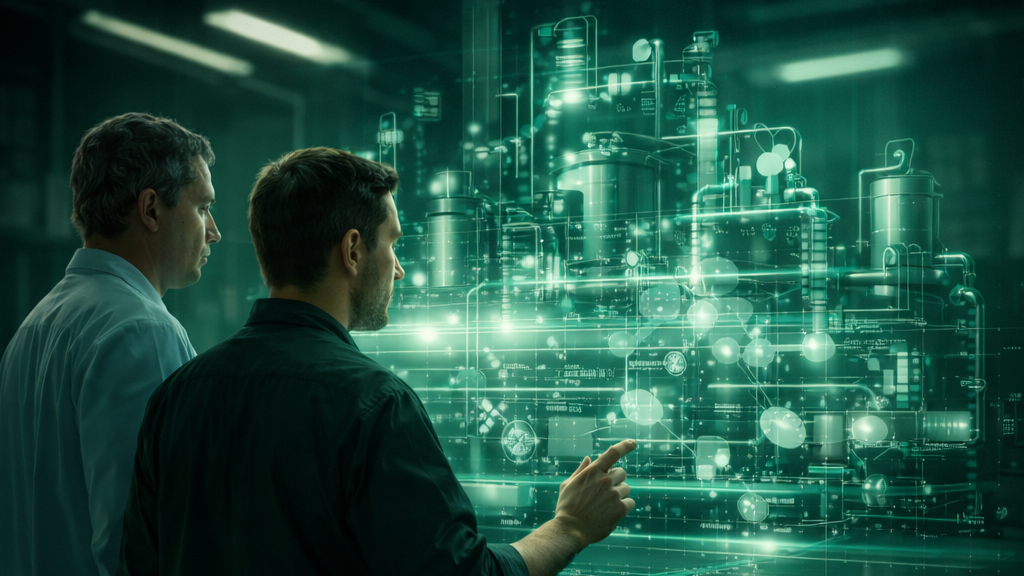
The prevailing narrative that artificial intelligence will eventually supplant human engineers is not merely reductive—it is scientifically and philosophically flawed. Throughout history, engineering progress has never been characterized by the sudden replacement of the human mind, but rather by a persistent continuum of mechanical and digital augmentation. We have moved from the tactile precision of slide rules to the processing power of supercomputers, and from manual drafting tables to sophisticated generative design platforms. AI assistants represent the newest stratum in this long lineage, acting not as autonomous replacements but as cognitive amplifiers. They fundamentally expand the boundary of what human engineers can conceptualize, simulate, and execute in the modern age. Consequently, the future of engineering is not a contest for supremacy, but a sophisticated synthesis of complementary intelligences where algorithmic precision is intertwined with human intuition, ethical reasoning, and contextual awareness.
The Synergy of Hybrid Intelligence and Human Intuition
Human engineers possess irreducible qualities that remain uniquely tied to the biological and professional experience: tacit knowledge accumulated through years of nuanced field exposure, ethical judgment shaped by deep societal responsibility, and the rare ability to navigate ambiguity where data is incomplete or contradictory. Artificial intelligence, by contrast, excels at sophisticated pattern recognition across colossal datasets, real-time predictive modeling, and high-velocity iteration unconstrained by the limits of human fatigue. When these distinct capabilities converge, the resulting synergy yields a potent form of hybrid intelligence. This collaboration is capable of accelerating discovery cycles, minimizing costly experimental redundancies, and revealing subtle correlations that would remain invisible to unaided human cognition. In this new era, the engineer ceases to be a solitary problem-solver and instead becomes a conductor orchestrating a complex symphony of computational instruments.
Redefining Operational Paradigms in Chemical Engineering
In modern scientific and industrial ecosystems, this collaboration is already redefining fundamental operational paradigms. In the field of chemical engineering, for instance, AI-driven simulation engines can analyze complex reaction pathways, thermodynamic feasibility, and process optimization scenarios within a matter of minutes—tasks that once demanded weeks of painstaking manual computation and verification. Yet, the decisive judgment regarding safety thresholds, long-term sustainability implications, and rigorous regulatory compliance remains firmly within the domain of human stewardship. The most transformative breakthroughs occur not when an AI acts independently in a vacuum, but when engineers leverage it as an exploratory companion. It serves as an intellectual telescope that magnifies the horizon of technical possibility while leaving the ultimate sense of direction, ethical purpose, and creative intent in human hands.
ChemCopilot: A Catalyst for Scientific Augmentation
Within this rapidly evolving landscape, specialized platforms such as ChemCopilot emerge as essential catalysts of augmentation rather than mere tools of automation. The true value of ChemCopilot does not reside exclusively in its computational speed, but in its unique capacity to contextualize vast amounts of scientific information and synthesize cross-disciplinary insights that might otherwise remain siloed. By providing engineers with decision-support frameworks grounded in deep chemical intelligence, it enables a shift in the professional's role. It allows engineers to transition away from repetitive analytical labor and toward higher-order innovation. ChemCopilot functions as an intellectual co-pilot—proactively suggesting new trajectories, highlighting data anomalies, and accelerating the ideation process—while the human engineer retains ultimate command over the validation and strategic direction of the project.
Driving Global Sustainability and Innovation
The global implications of such deep-seated collaboration extend far beyond simple industrial efficiency or corporate productivity. In urgent sustainability initiatives, AI-assisted engineers are now empowered to design energy-efficient materials, optimize waste-reduction processes, and accelerate the discovery of green alternatives to hazardous compounds with unprecedented speed. In the pharmaceutical sector, the convergence of machine learning with biochemical expertise is significantly shortening drug discovery timelines without compromising the rigor required for human safety. Furthermore, in academic research, students and scholars gain access to analytical tools once reserved for only the most elite laboratories, effectively democratizing innovation across geographical and economic boundaries. The collaborative model thus transforms AI from a perceived disruptor into a powerful equalizer.
Conclusion: The Symbiotic Future of Engineering
Crucially, the professional discourse must evolve from fear-laden rhetoric toward a more evidence-based pragmatism. The central question of our time is not whether AI will replace engineers, but how engineers who embrace collaboration with AI will consistently outperform those who choose to resist it. Technological history repeatedly demonstrates that augmentation outpaces obsolescence; the engineer who adapts to these new tools becomes exponentially more capable and influential, not expendable. ChemCopilot exemplifies this philosophy by positioning itself as an enabler of intellectual expansion rather than a substitute for human expertise. It empowers professionals to interrogate their data more deeply, hypothesize more boldly, and execute their designs with a level of precision that was previously unreachable.