The Autonomous Bench: Revolutionizing Laboratory Equipment and Supplies with AI Agents
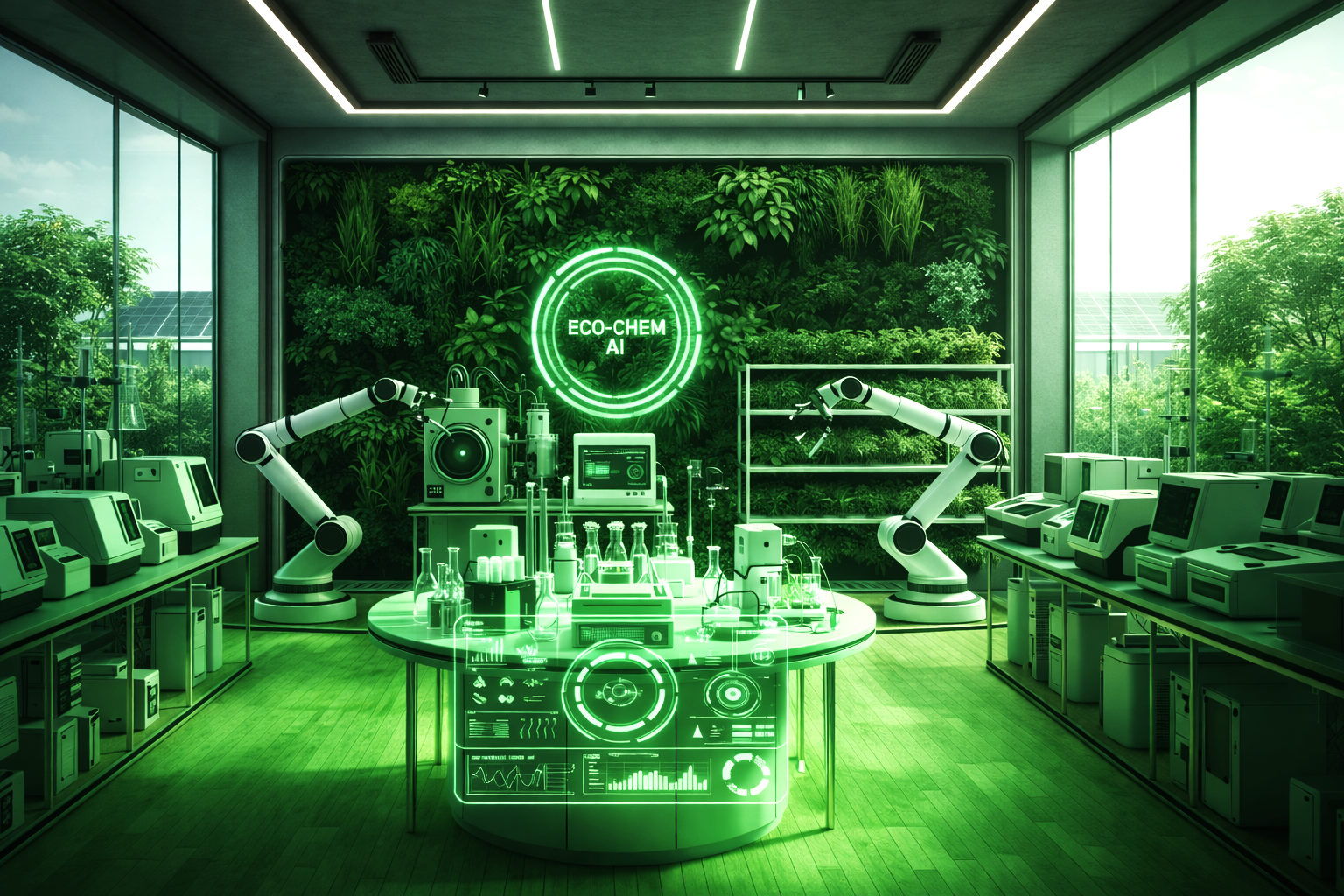
In the world of R&D, we’ve spent decades perfecting the "stuff" of science. We have ultra-precise scales, high-resolution spectrometers, and specialized reagents. But even the most advanced laboratory equipment and supplies are essentially "dead" until a human intervenes.
That is changing. The integration of AI Agents is transforming the lab from a room full of tools into a self-orchestrating entity.
Redefining "Equipment": From Hardware to Teammates
Traditionally, your lab equipment is a silent partner. It sits on the bench and waits. With AI Agents, your hardware gains a "brain" and a voice.
Self-Optimizing Instruments: Imagine a chromatography system that doesn't just run a method, but analyzes the peaks in real-time and adjusts the flow rate or gradient to achieve better resolution on the fly.
Predictive Maintenance Agents: Instead of a "Service Required" light appearing mid-experiment, an AI Agent monitors internal vibrations and sensor drift, autonomously scheduling a technician and ordering the necessary replacement parts before a breakdown occurs.
The "Smart" Side of Laboratory Supplies
The "Supplies" half of the equation is often the biggest bottleneck in discovery. AI Agents turn logistics into a background process that requires zero human clicks.
Dynamic Inventory Orchestration: By connecting to your ELN (Electronic Lab Notebook), AI Agents anticipate the laboratory supplies you'll need based on your planned experiments. If you’re planning a 50-step synthesis, the agent ensures the rare catalysts arrive exactly 24 hours before they are needed.
Autonomous Procurement: Agents can now act as specialized buyers. They scan global marketplaces, compare purity certificates (COAs), and negotiate pricing based on your lab's historical volume—all without you opening a single browser tab.
| Category | Legacy Approach | AI Agent Approach |
|---|---|---|
| Procurement | Manual reordering when a shelf is empty. | Anticipatory ordering based on experimental "burn rate." |
| Calibration | Monthly manual checks by staff. | Continuous self-calibration and digital twin syncing. |
| Waste Management | Reactive disposal of expired chemicals. | Real-time tracking of shelf-life to prioritize usage. |
The Vision: The "Dark Lab" Concept
We are moving toward a scenario where the physical management of laboratory equipment and supplies is entirely handled by an agentic layer. This allows scientists to focus on the what and the why, while the AI handles the how.
When your equipment can talk to your supply chain, the "labor" in laboratory starts to disappear, leaving only the science.
Key Takeaway: In 2026, the most valuable feature of your laboratory equipment isn't its precision—it's its ability to participate in an autonomous agent network.
Read too:
https://www.chemcopilot.com/blog/best-lab-equipment-for-sustainable-chemistry-tools-for-a-greener-lab