The $5 Billion Threshold: Why Internal AI is a Strategic Trap for the Mid-Market
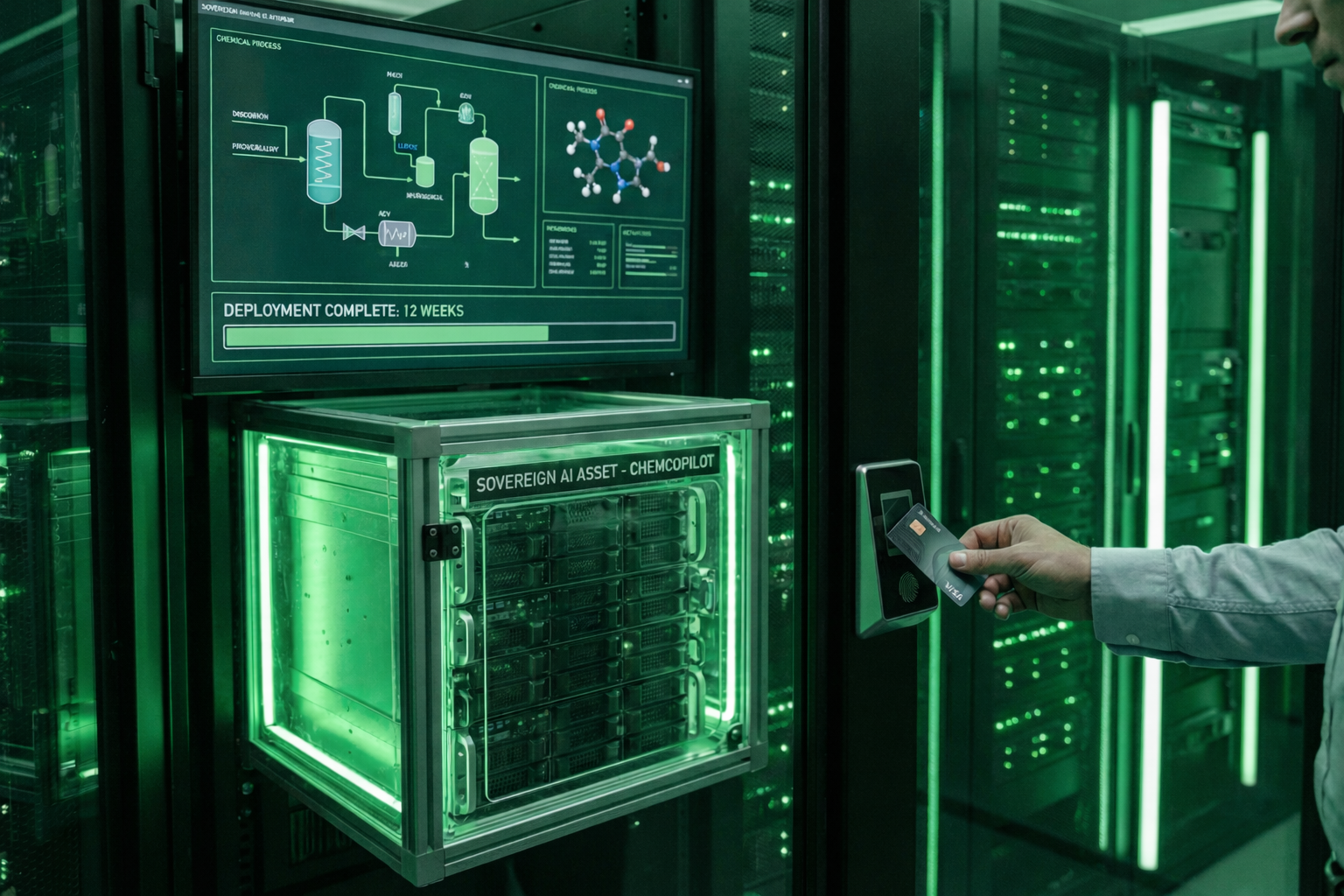
In 2026, the industrial sector has reached a tipping point. "Owning your AI" is no longer a tech milestone; for many, it has become a deadly ego trap. While global giants ($5B+ revenue) have the capital to absorb massive R&D losses, mid-market leaders are discovering that building an internal AI strike team is a high-speed path to "Pilot Purgatory."
According to the McKinsey & Company "State of AI" research, nearly half (48%) of companies with more than $5 billion in revenue have successfully reached the scaling phase of their AI programs. In stark contrast, only 29% of companies with revenues under $100 million have managed to move beyond the pilot stage. For the mid-market, the probability of failure is not a risk—it is the statistical norm.
1. The LLM Leakage: Gifting Your "Uranium" to Rivals
The first mistake many firms make is relying on standard, generic LLMs (ChatGPT, Gemini, or Claude Enterprise) to optimize their chemical processes.
Prompts are Permanent: Even with "Enterprise" privacy layers, the logic patterns and "Negative Data" (the logs of every failed reaction, catalyst mismatch, and pressure spike) define the underlying patterns that feed the next generation of global models.
The Strategic Leak: By using these tools, you are effectively paying to teach a global AI how to avoid the specific mistakes you paid to discover. Eventually, that optimization becomes "general knowledge" available to your competitors, dissolving your proprietary edge.
2. The Black Box vs. The Weight Handover
Traditional SaaS vendors operate on a model of Strategic Dependency. They ingest your data and provide an interface, but they keep the "intelligence"—the Model Weights—locked in their own vaults.
The Captivity Trap: If you stop paying the subscription, the "brain" built on your data is lobotomized. You are left with zero operational memory and must start from scratch.
The ChemCopilot Sovereignty: We are the only partner that legally and contractually returns the Model Weights to you. You own the resulting intelligence asset as a permanent entry on your balance sheet.
3. The True Cost: The 5-10 Person Burn Rate
Building an internal "Chemical AI" that actually works requires more than just a data scientist. You need a cross-functional "Strike Team" of 5 to 10 specialists: an AI Architect, ML Engineers, Data Pipeline Engineers, and—crucially—Domain Experts (Chemists and Process Engineers) who can translate molecular kinetics into code.
3.1 Annual Build Cost by Region (Senior 5-10 Pax Team)
Hiring a team is only 40% of the cost. The rest is The IT Queue Tax: your project will sit behind ERP updates and cybersecurity firewalls for months. Below is the global cost of a senior 5-person "Strike Team" to build a proprietary ChemCopilot-level tool.
| Region / Country | Annual Build Cost (USD) | Implementation Risk |
|---|---|---|
| United States/EU | $1,500,000 – $2,200,000 | High. 30% annual talent turnover rate. |
| Brazil / Mexico | $600,000 – $800,000 | Medium. Hard to find "Hybrid" (Chemist + ML) talent locally. |
| India | $550,000 – $750,000 | Medium. High scale, but requires intense management overhead. |
| Chemcopilot Partner | Fractional / OpEx under US$ 60,000 | Low. Deployment in 8 weeks, not 18 months. |
4. The 14-Month Dead Zone
The most overlooked cost of an internal build is Time-to-Yield. An internal project typically takes 14 to 18 months just to reach a testable state. During this "Dead Zone," your R&D budget is bleeding cash while your production lines remain unoptimized. You are essentially paying for a learning curve that your competitors have already cleared.
5. Sovereignty Without the Sunk Cost
ChemCopilot bridges the gap between the speed of a global specialist and the total ownership of an internal build. We don't just provide a service; we deliver a Digital Vault equipped with a proprietary 'Industrial Brain' tailored to your specific chemistry.
Crucially, we protect your sovereignty: every model weight, every discovered formula, and every ounce of process intelligence remains yours. We provide the vessel and the intelligence; you own the discovery.
| The Strategic Pillar | Internal Build (DIY) | ChemCopilot Model |
|---|---|---|
| Data Security | Full control, but creates an internal data silo. | Isolated Sovereignty. Your data trains only YOUR model. |
| Ownership of Weights | You own them after 2 years of expensive dev. | Contractual Handover. The "Trained Brain" (weights and learning) is returned to you. |
| Financial Impact | $1M+ CapEx (High risk of board rejection). | OpEx Efficiency. Proven ROI in months, not years. |
6. Time is Money
Unless your organization has a $5 Billion revenue cushion and a 24-month horizon for failure, building internally is a high-cost path to a statistical dead end.
| The Strategic Pillar | Internal Build (The Trap) | ChemCopilot Model |
|---|---|---|
| Ownership of Weights | You own them, but they cost $2M to develop. | Full Handover. You own the "Trained Brain." |
| Data Security | High, but limited by internal IT speed. | Zero Leakage. Isolated industrial instances. |
| Monetization | Possible (if you survive the 71% failure rate). | Sovereign Asset. Build your internal value. |
If your production schedule cannot wait more than 12 months for a "maybe," working with the Chemcopilot team is the only way to accelerate. We transform the standard 12-month "failure phase" into a less than 12-week deployment cycle. Stop paying for the learning curve. Pay for the results. Join the 29% who actually scale—by choosing the partner that hands you the keys on Day One.
Hiring Chemcopilot is the only way to get the speed of a specialist with the IP protection of an internal build. We don't just "manage" your process; we help you build a Digital Asset that you own, control, and can relly.