The Future of Chemistry: How The ChemCopilot Navigates 2026 Trends
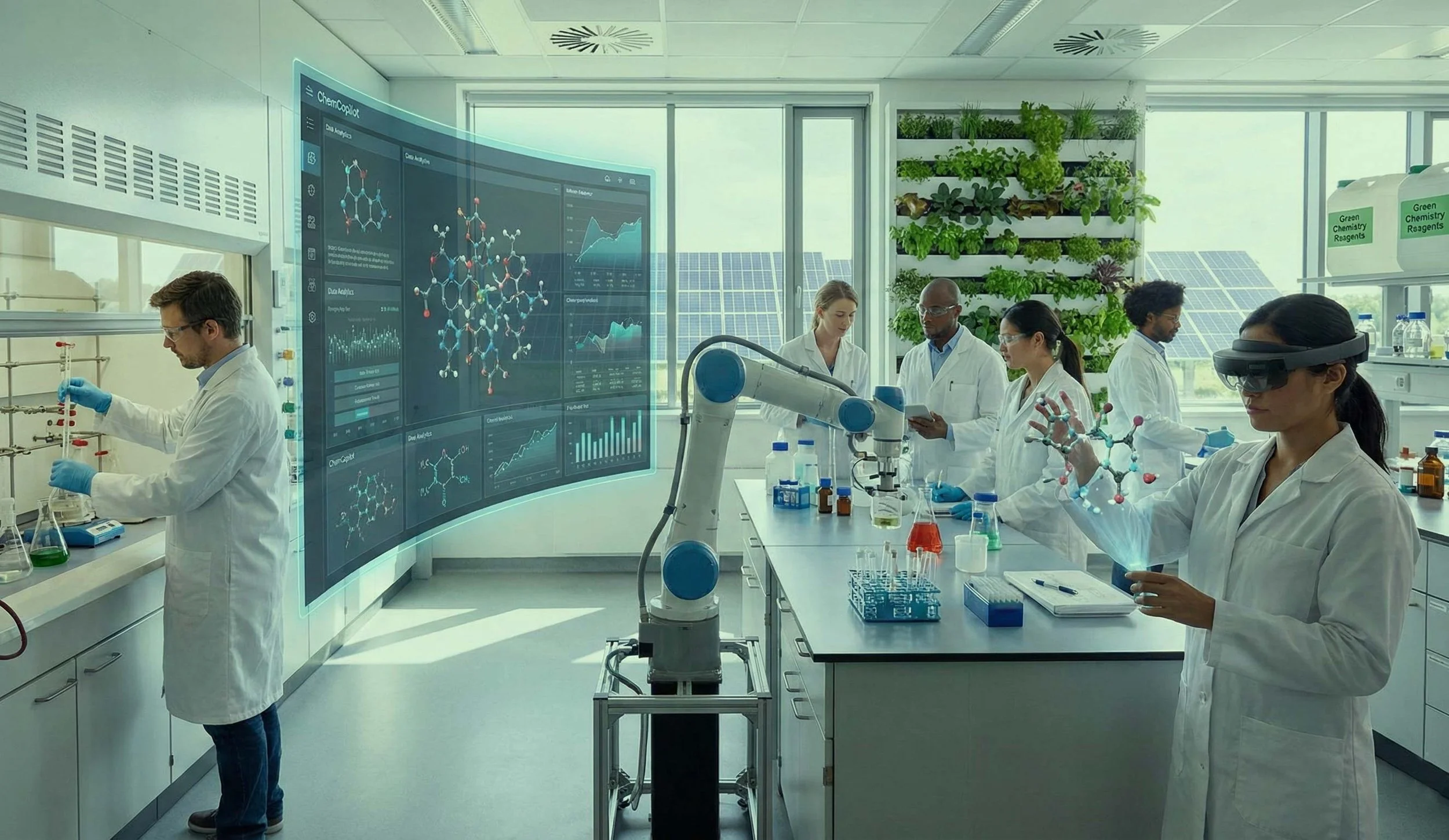
The world is changing at an unprecedented speed. What once took decades to research in a laboratory is now accelerated by algorithms, data, and a new environmental consciousness. At the heart of this transformation lies the intersection between technology and applied science.
1. Artificial Intelligence: The "Brain" of the Modern Laboratory
Generative AI is not just for writing emails; it is redesigning molecules.
In ChemCopilot: The tool acts as an essential co-pilot to predict chemical reactions, optimize formulas, and automate scientific literature searches.
Impact: Drastic reduction in R&D (Research and Development) time and the elimination of human error in repetitive technical office tasks.
2. Sustainability and Green Chemistry (ESG)
Clean energy and the circular economy are no longer optional. The market demands materials that do not harm the planet.
In ChemCopilot: It assists in the selection of less toxic reagents and the calculation of synthetic routes with a lower carbon footprint (atom economy).
Impact: Facilitates compliance with climate goals and attracts ESG-focused investors.
3. Data, Security, and Intellectual Property
In a "Zero Trust" world, the formula for a new polymer or drug is a company's most valuable asset.
In ChemCopilot: Full focus on privacy. Ensuring that queries and data entered by chemists are protected against leaks and industrial espionage.
Impact: Building digital trust, allowing scientists to use AI without fear of losing their patents.
4. Convergence with Biotechnology
The boundary between synthetic chemistry and biology is disappearing. Personalized therapies depend on ultra-precise chemical processes.
In ChemCopilot: Support for the development of biomaterials and remote diagnostics, where precision chemistry meets genomics.
Impact: Transforms healthcare from reactive to proactive, creating customized solutions for an aging population.
5. Continuous Education: The Chemist of the Future
Professionals who do not learn to use AI tools will be left behind. Reskilling (upskilling) is the new norm.
In ChemCopilot: It acts as an intelligent tutor. By using the platform, professionals learn new methodologies and stay updated with the latest micro-certifications and industry trends.
Impact: Democratization of advanced technical knowledge.
Comparative Table: The Legacy Lab vs. The ChemCopilot Lab
| Feature | Traditional Model | ChemCopilot Era (AI + Trends) |
|---|---|---|
| Research | Manual, slow, and fragmented | Centralized, AI-assisted, and instantaneous |
| Sustainability | Reactive (error correction) | Proactive (sustainable design from inception) |
| Data Security | Physical documents or isolated local files | Secure cloud with end-to-end encryption |
| Collaboration | Information silos | Integrated communities and innovation hubs |
Other Trends
While the core focus is science, ChemCopilot is also influenced by and drives other areas:
6. Smart Logistics: Enhances the resilience of the chemical supply chain.
7. Digital Finance: Facilitates traceability and smart contracts in industry transactions.
8. Community Infrastructure: Strengthens networking and collaboration in chemical innovation hubs.
9. Psychosocial Wellbeing: Reduces cognitive load and burnout by automating bureaucratic laboratory tasks.
10. Immersive Experiences: Opens doors for molecular visualization in AR/VR in the future.
Important Note: ChemCopilot does not replace the chemist; it elevates them. In a scenario where mental load and burnout are real risks (Trend #9), intelligent automation emerges as the primary ally to return creative time to scientists.
The Next Step
The future of chemistry is digital, sustainable, and collaborative. Join us at ChemCopilot.com.
If you want to test in Industrial process: Talk with an Expert
For Academic Usage use this link